Charlotte & Mecklenburg County
Charlotte Foundation Repair, Read From the Red Clay Up
Foundation trouble in a Charlotte house usually announces itself above ground: a zigzag crack in the brick, a bedroom door that stopped latching, a floor that runs downhill toward one corner. This page sorts those signs into likely causes and puts typical repair prices beside them.
Foundation repair in Charlotte usually means one of three jobs: sealing and steadying cracked brick or block, lifting a settled corner onto steel piers, or drying out a basement. This Old House's 2026 guide puts the typical project at $2,224–$8,134. One crack runs $250–$800, each pier $1,000–$3,000, and leveling a whole house $20,000–$23,000.
Why Charlotte foundations move: clay and slope
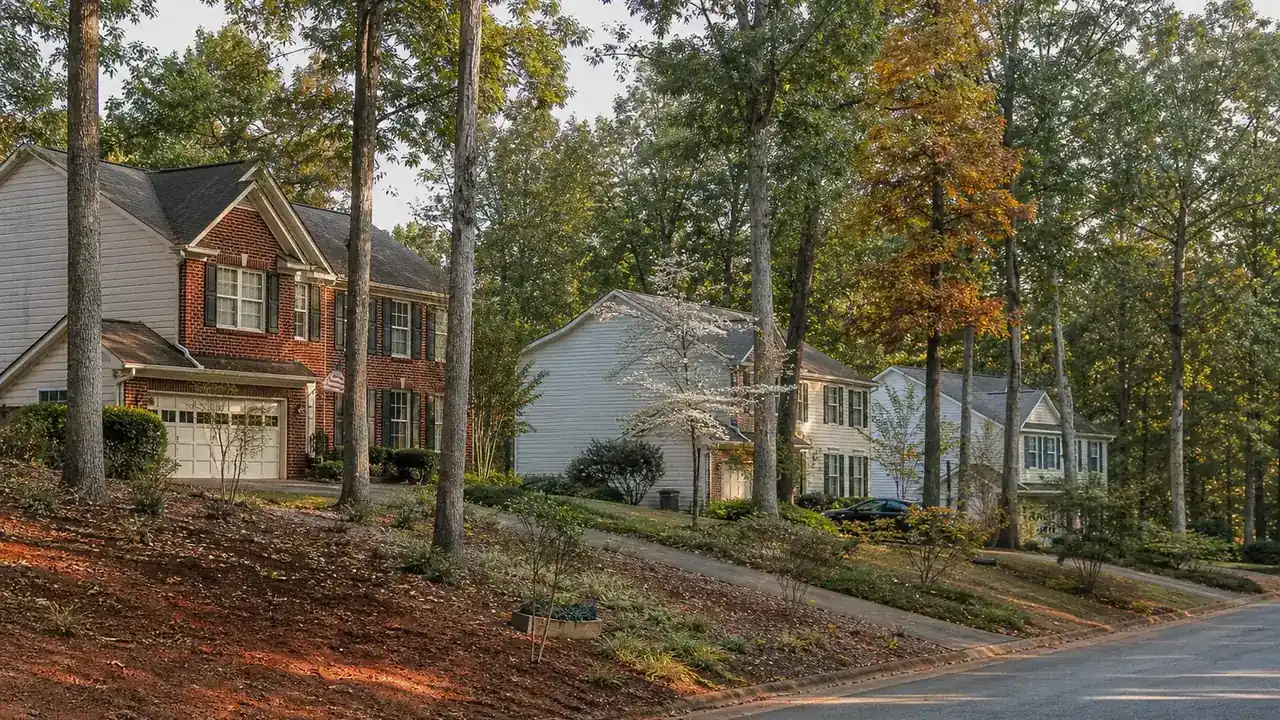
Dig a few inches into most Charlotte yards and the ground turns red and sticky. That is Cecil soil, the most common series in Mecklenburg County at about 37% of its soil acreage, with a thick layer of firm red clay under a thin sandy topsoil (USDA NRCS). It drains well and barely changes volume, so on its own it makes decent ground for a footing.
The movers are elsewhere. About 18% of the county's soil acreage is in soils the NRCS data rate high or very high for shrink-swell, such as Iredell, Enon and Helena, which swell when wet and shrink when dry. When the NRCS rates county soils as house sites, shrink-swell is the limitation it names most often, with slope a close second. Add hillside lots cut and filled to make a flat pad, and you have the usual recipe for a corner that sinks or a wall that cracks. The guide to Charlotte's red clay and soil ratings goes further.
Which signs of foundation trouble matter?
- Stair-step cracks in brick climbing from a corner or a window, especially when the gap is wider at one end.
- Drywall cracks angling off the corners of doors and windows, or a seam opening where a wall meets the ceiling.
- Doors and windows that stick, swing on their own or no longer latch.
- Floors that slope, or a gap opening under baseboards and trim.
- Water on a basement floor, a damp stripe along the bottom of a wall, or a musty smell downstairs.
One sign alone turns up in plenty of sound houses. Several together, or one that keeps growing, deserves a closer look. What each warning sign usually means takes them one at a time.
The repairs, page by page
- Foundation crack repairReading zigzag brick cracks and split block or poured walls, and knowing when filling is not enough.
- Settled foundations and house levelingPush piers, helical piers and support posts for corners, walls and floors that have dropped.
- Basement waterproofingGutters and grading, interior drains and sumps, sealing cracks, and digging out the outside of a wall.
- What Charlotte foundation work costs in 2026Every common job, the national range published for it, and who published it.
Ground, rain and warning signs
- Charlotte's red clay and your foundationWhat the USDA soil survey of Mecklenburg County says about building on it.
- What each foundation warning sign meansCracks, sticking doors, sloping floors, gaps at trim and water downstairs, answered one by one.
Rain that never takes a season off
Charlotte has no dry season to speak of. Charlotte Douglas Airport averages 43.6 inches of precipitation a year, and every month brings more than 3 inches, from 3.13 in February to 4.35 in August (NOAA 1991–2020 normals). About 11 days a year deliver an inch or more at once. Summer heat dries the clay out between storms; the next downpour soaks it again.
The big storms can be extreme. In July 1997 the remnants of Hurricane Danny dropped as much as 11.40 inches in 24 hours on parts of Mecklenburg County, and water at USGS gauges on Irwin Creek and Little Sugar Creek rose 20 feet or more (USGS). If water reaches your lower level, the basement waterproofing page lays out the options.
New houses crack too
Charlotte's housing is young. The median home was built in 1995, about 43% of homes date from 2000 or later, and only about 28% predate 1980 (U.S. Census ACS 2020–2024). That shifts the usual story. In a newer subdivision on rolling ground, a common culprit is soil that was moved: fill placed on the low side of a lot to level it, which can keep settling for years if it was not compacted well.
Older houses in neighborhoods like Dilworth or Plaza Midwood raise other questions: brick piers, softer old mortar, decades of drainage changes. Either way, a repair starts by working out which part of the house is moving and why.
How a Charlotte foundation repair request works
Charlotte Foundation Crew is an independent local resource. We explain the signs and the typical prices; we don't do repair work. Requests from this site are handed to one independent foundation specialist covering Charlotte, who calls you, asks what you have noticed and sets up a visit.
Before you sign, check two things. North Carolina requires a general contractor's license for projects of $40,000 or more (N.C. Gen. Stat. 87-1), and the state licensing board runs a public license search. Mecklenburg County Code Enforcement says its permit exemption for smaller jobs does not cover repair or replacement of load-bearing structures, so ask whether your repair needs a permit. Ask for the scope, price and warranty terms on paper before work starts.
Questions homeowners ask
How much does foundation repair cost in Charlotte?
National guides put a typical project between $2,224 and $8,134 (This Old House, 2026), with Fixr's January 2026 figures close behind at $2,200–$8,200. Filling one crack can cost a few hundred dollars; leveling a whole house can pass $20,000. The Charlotte foundation repair cost guide lists each job and its source.
Does cracked brick mean my foundation is failing?
Not always. Brick veneer is a thin outer skin, and hairline mortar cracks are common. A stair-step crack that is wider at one end, keeps lengthening, or lines up with a sticking door inside points to movement below. Mark its ends with a pencil and the date, then check it every few weeks.
Is the first visit free?
It depends on the company. Many local specialists don't charge for the first visit; ask when they call, before they come out.
Sources
- U.S. Census Bureau, American Community Survey 2020-2024: year structure built, Charlotte city
- NOAA 1991-2020 U.S. Climate Normals, Charlotte Douglas Airport (station USW00013881, monthly)
- USDA NRCS Web Soil Survey (Mecklenburg County, North Carolina soil survey)
- USGS Fact Sheet FS-036-98: Effects of August 1995 and July 1997 Storms in the City of Charlotte and Mecklenburg County
- Mecklenburg County Code Enforcement: permitting
Describe the crack, the door or the water
Say what you've noticed and where in the house. One independent foundation specialist covering Charlotte will call you back to talk it through and arrange a visit.